
+ Memory Problems · Neuro+ Medellín
“I keep forgetting things” isn’t always “just age.” Telling apart normal forgetfulness, mild cognitive impairment and dementia (such as Alzheimer’s disease) requires a careful clinical and neuropsychological evaluation. An early diagnosis makes it possible to identify the real cause of memory problems, start timely management and plan future care if needed.
60-70%
Of dementia cases are caused by Alzheimer’s disease (WHO)
MCI
Mild cognitive impairment: the stage before dementia
2
Key evaluations: clinical neurology and neuropsychology
Mild cognitive impairment (MCI) refers to changes in memory or other cognitive functions that are noticeable to the person or those around them but do not significantly interfere with basic daily activities. It is different from dementia, in which cognitive impairment does affect functional independence. Not all MCI progresses to dementia, but identifying it early allows close follow-up and, in some cases, action on modifiable risk factors.
Some slowing in recalling names or words can be part of normal aging. What isn’t normal is forgetfulness that interferes with daily activities, repeating recent questions, or getting disoriented in familiar places.
The most common cause of dementia. It is characterized by progressive loss of recent memory, followed by impairment of other cognitive functions.
Associated with cerebrovascular disease (stroke or small vessel disease). Its course may be more stepwise than that of Alzheimer’s.
Combines fluctuating cognitive decline with visual hallucinations and parkinsonian symptoms.
Noticeable cognitive changes that do not yet affect functional independence. Requires close follow-up.
Related to Parkinson’s Disease, multiple sclerosis or other underlying neurological diseases.
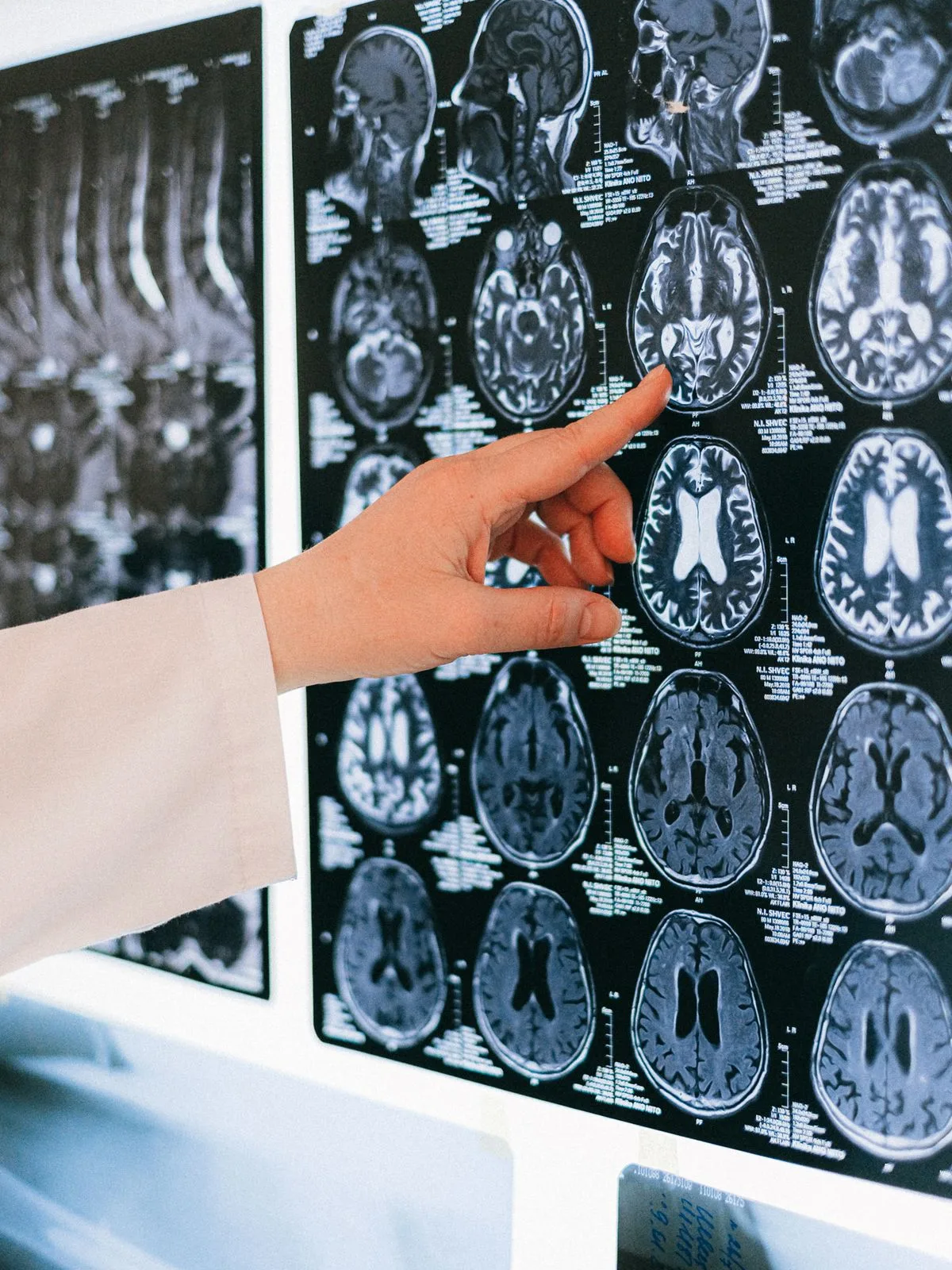
Diagnosis combines a clinical neurological evaluation, a neuropsychological assessment that objectively measures performance across different cognitive domains, imaging studies (MRI) to rule out structural or vascular causes and, in some cases, lab tests to rule out reversible causes (such as thyroid problems or vitamin B12 deficiency).
The neurologist takes a clinical history with the patient and a family member, performs a neurological exam and defines additional tests.
Duration: 30-45 minutos – Evaluación cognitiva inicial.
Approach: Clinical history with the patient and a family member, neurological exam and definition of additional tests.
Bring with you, if you have them:
El envejecimiento normal puede incluir cierto enlentecimiento para recordar nombres o palabras, pero no interfiere con las actividades diarias. En el deterioro cognitivo, los olvidos afectan la independencia funcional, se acompañan de desorientación, dificultades para planificar o cambios de personalidad. Si nota que estos cambios interfieren con la vida cotidiana, se recomienda evaluación neurológica.
No siempre. Una proporción de los casos de deterioro cognitivo leve permanece estable o incluso mejora, especialmente cuando hay causas reversibles como déficit de vitaminas, alteraciones tiroideas o trastornos del sueño. El seguimiento neurológico periódico permite detectar cambios a tiempo y actuar sobre los factores modificables.
Sí, existen factores modificables con evidencia científica sólida. El control de la hipertensión, diabetes y colesterol, la actividad física regular, el sueño adecuado, la estimulación cognitiva estructurada y el manejo del estrés pueden reducir significativamente el riesgo. La intervención temprana con un neurólogo permite diseñar un plan personalizado.
Se recomienda consultar cuando los olvidos son frecuentes, cuando se repiten preguntas o conversaciones, cuando hay dificultad para manejar finanzas o medicamentos, o cuando familiares notan cambios en el comportamiento o la personalidad. Una evaluación temprana permite descartar causas tratables e iniciar manejo oportuno.
El diagnóstico incluye una evaluación neurológica clínica, pruebas neuropsicológicas que miden memoria, atención, lenguaje y funciones ejecutivas, y estudios de neuroimagen como resonancia magnética cerebral. En algunos casos se solicitan exámenes de laboratorio para descartar causas metabólicas o infecciosas.
+ Book today
Specialized clinical and neuropsychological evaluation. In-person care in Medellín, or teleconsultation from any city.

Enfermedades neuromusculares, migraña, cefalea, sueño, Parkinson y demencia.