
+ Epilepsy · Neuro+ Medellín
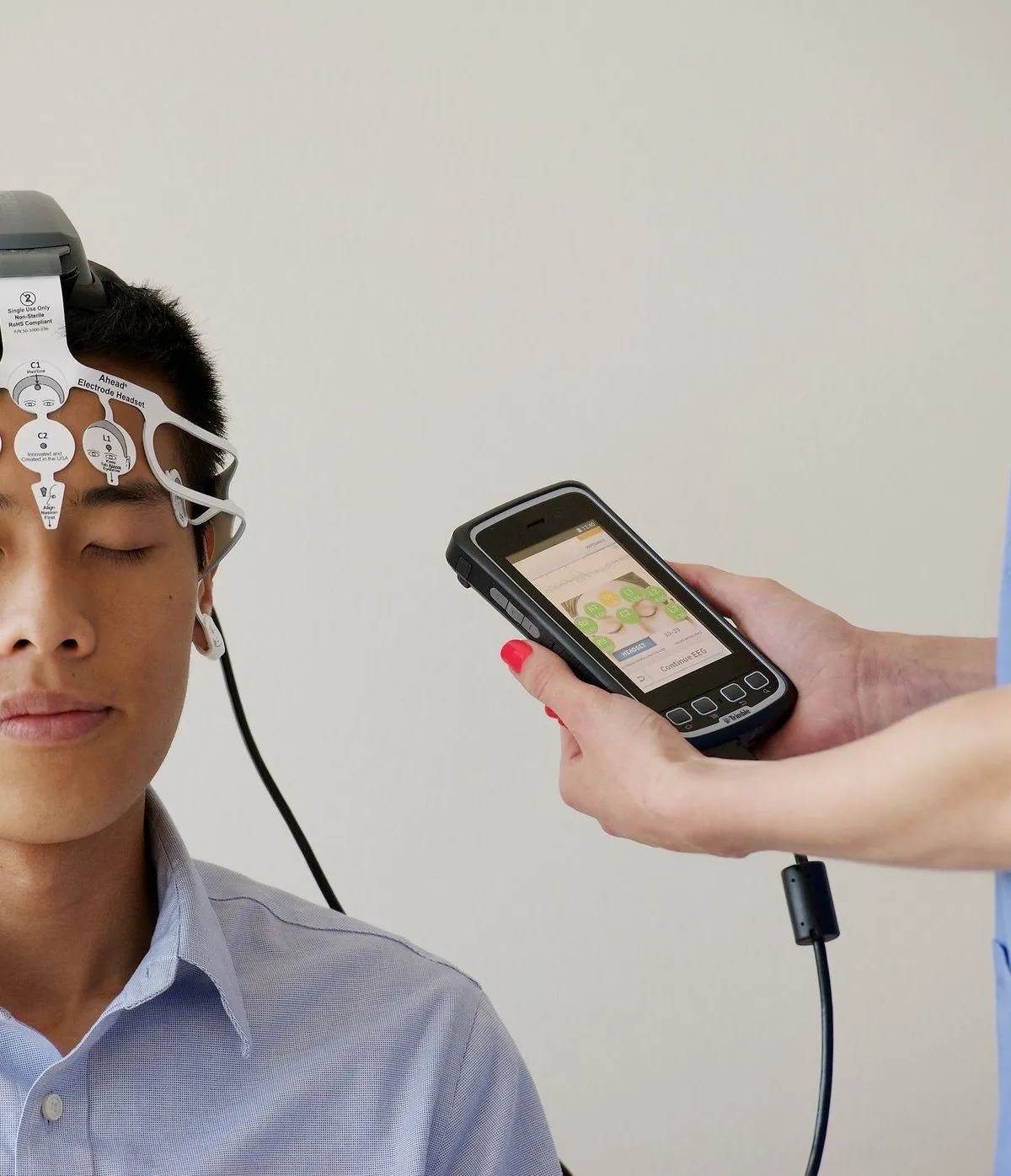
Epilepsy is one of the most common neurological diseases — and one of the most surrounded by myths. It affects about 1% of the world’s population and, with the right treatment, more than 70% of patients achieve complete seizure control. At Neuro+ we offer diagnosis with electroencephalography (EEG) and specialized care for adults and children.
1%
Of the population has epilepsy
70%
Achieve complete control with treatment
EEG
Diagnostic test available at Neuro+
+ What is epilepsy?
Epilepsy is defined by the brain’s tendency to produce recurrent, unprovoked seizures, caused by abnormal and excessive electrical activity of neurons.
A single seizure does not equal epilepsy: diagnosis generally requires two or more unprovoked seizures, or one seizure together with findings that indicate a high risk of recurrence.
When seizures persist despite trying two or more appropriate antiepileptic medications at the correct doses. That’s when alternatives are considered, such as adjusting treatment, combination therapy or referral for a pre-surgical evaluation.
+ Differential diagnosis
Precisely identifying the type of seizure is what makes it possible to choose the right antiepileptic medication.
They start in a specific area of the brain. Awareness may be preserved or impaired.
They involve both hemispheres from the start: they include absence, myoclonic, tonic-clonic and atonic seizures.
Stiffening followed by generalized muscle jerking, with loss of consciousness.
Brief episodes of disconnection that can be mistaken for inattention or distraction.
First seizures, under study to define the type of epilepsy and the initial treatment.
Remains uncontrolled after trying at least two appropriate antiepileptic medications. Requires specialized evaluation.
Linked to specific mutations or hereditary syndromes. Care may include counseling for the family.
A seizure lasting more than 5 minutes, or repeated seizures without regaining consciousness in between. It is a medical emergency.
+ Causes and factors
In a significant proportion of cases, no structural cause is found.
These situations are emergencies — go to the emergency room immediately
+ Diagnosis and treatment
The goal of treatment is complete seizure control with the fewest possible side effects.
+ Your first consultation
The neurologist takes a detailed clinical history: a description of the seizures, age of onset, frequency, associated factors, family history and response to any previous treatments. A complete neurological exam is performed, and tests such as an EEG or MRI are ordered as needed.
Duration: 30 minutes — Complete neurological evaluation.
Approach: Diagnosis and classification — Identify the type of seizure and define tests and treatment.
Bring with you, if you have them:
+ Frequently asked questions
Not in every case, but with the right treatment more than 70% of patients achieve complete seizure control and lead a normal life. Some specific childhood syndromes may resolve over time.
It depends on seizure control. Most people with well-controlled epilepsy can work and lead a normal life; restrictions such as driving depend on how long you’ve been seizure-free and current regulations.
Protect the person from injury, turn them on their side if possible, don’t put anything in their mouth and time how long it lasts. If it lasts more than 5 minutes or recurs without them regaining consciousness, call emergency services.
Some forms have a genetic component, but most cases are not directly inherited. The neurologist can advise on the specific risk based on the type of epilepsy.
It varies depending on the type of epilepsy and how long you’ve been seizure-free. In general, reducing or stopping treatment is only considered after a long period (often 2 years or more) without seizures, and always under the neurologist’s supervision.
+ Book today
Diagnosis with EEG and specialized care for adults and children. In-person care in Medellín, or teleconsultation from any city.
Demyelinating diseases, epilepsy, Parkinson’s disease, dementia, migraine, sleep.